

A Somatic Path to Sustainable Recovery

The Science of Somatic Recovery
The Body's Influence on the Brain
Up to 80-90% of vagus nerve fibers send signals from the body to the brain, while only 10-20% send signals from the brain to the body.
There are over 20 times more sensory neurons than motor neurons in the human body, with an average of around 10 million sensory neurons sending information from body to brain, compared to roughly half a million motor neurons sending information in the reverse direction.
Key Insight: The body constantly informs the brain about internal states, physical sensations, and environmental conditions. This is why body-based approaches like somatic therapy are so effective—they leverage the body’s rich communication pathways to influence emotional and mental well-being.
Pillars of Somatic Recovery
-
Improved Interoception
Somatic practices develop interoception—your ability to sense and understand internal bodily states. This heightened awareness helps you recognize and address stress responses before they escalate.

-
Nervous System Regulation
Through breathing, movement, and body awareness exercises, somatic approaches allow individuals to shift the survival physiology of fight, flight, freeze into a more balanced, satisfying internal state.

-
Trauma Processing
Physical sensations act as a gateway to access and process traumatic memories that may be challenging to approach through traditional talk therapy. This gradual, body-based exposure often feels safer and more tolerable.

-
Mind-Body Connection
Trauma and stress are stored physically in the body as chronic tension, pain, or other symptoms. Somatic approaches help release these "stuck" patterns to promote integration and flow.

-
Empowerment and Agency
Learning to track and influence one’s own physiological states creates a greater sense of somatic understanding and preparedness, which builds confidence and resilience in navigating the ebbs and flows of life.


“At the heart of resolving addiction is traumatic stress, the stuck, and hence repeating, survival states of fight, flight or freeze. These easily triggered, threat-associated signals bring into consciousness emotional pain too overwhelming to stay in contact with. This makes it hard to remain embodied in the present moment, and sends us looking for ways to avoid, deny, distract, or numb ourselves.”
–Joel Decker, MFT, SEP
Key Research & Why it Matters
-
Price et al. (2017): Showed significant improvements in body awareness, emotion regulation, and PTSD symptoms in trauma survivors after somatic therapy.
Ogden and Fisher (2015): Demonstrated success with sensorimotor psychotherapy for trauma survivors, especially when talk therapy was insufficient.
Van der Kolk (2014): Found that 83% of participants in Somatic Experiencing therapy no longer met PTSD criteria after 20 weeks.
-
Schwartz (2019): Found that integrating Somatic Experiencing into alcohol addiction treatment reduced cravings and improved retention in treatment programs.
Gordon et al. (2018): Showed body-based interventions helped reduce withdrawal symptoms and improve emotional regulation in opioid recovery.
Price & Smith-DiJulio (2016): Mindful Awareness in Body-Oriented Therapy (MABT) improved emotion regulation, craving management, and relapse prevention in women in substance use treatment.
-
Our bodies follow universal patterns. Like trees, rivers, and shells, humans grow and heal through spiral patterns of adaptation, revealing a fundamental interconnectedness with natural systems.
Stress response is a shared biological language. Humans and animals activate the same basic defense mechanisms of fight, flight, and freeze, demonstrating that our nervous system's wisdom is an evolutionary survival strategy deeply rooted in nature.
Movement is memory. Our fundamental movement patterns mirror evolutionary journeys from sea creatures to land mammals, suggesting that every motion carries the imprint of our biological history.
Rhythm synchronizes life. Human biological cycles, from breath to heartbeat, naturally synchronize with environmental frequencies, like ocean waves and planetary electromagnetic fields, revealing we're not separate from our environment but intimately connected.
Healing is a cooperative process. Just as trees strengthen through appropriate stress and forests communicate through underground networks, human recovery occurs through supportive connections and adaptive responses.
Sensory processing transcends species. Our ability to sense, feel, and respond mirrors fundamental biological communication systems found across living organisms, from plant gravity sensing to animal touch receptors.
Co-regulation is a survival strategy. Group nervous system regulation, seen in human communities and animal herds, represents a profound biological mechanism for safety and resilience.
The body knows. Cellular healing, adaptation, and growth follow consistent patterns across living systems, suggesting that our bodies carry an inherent wisdom far beyond conscious understanding.
-
The body’s constant communication with the brain underpins the effectiveness of somatic therapy. By tapping into this rich body-to-brain feedback system, somatic practices not only address the root causes of trauma and stress, but also empower individuals to sustain long-term embodied recovery, free from addiction.
The fascinating connections between human biology and nature illustrate why somatic work is so powerful - we're tapping into ancient, natural patterns that are deeply encoded in our biology. Recovery isn't about forcing change, but about aligning with the natural, intelligent processes already present within us.
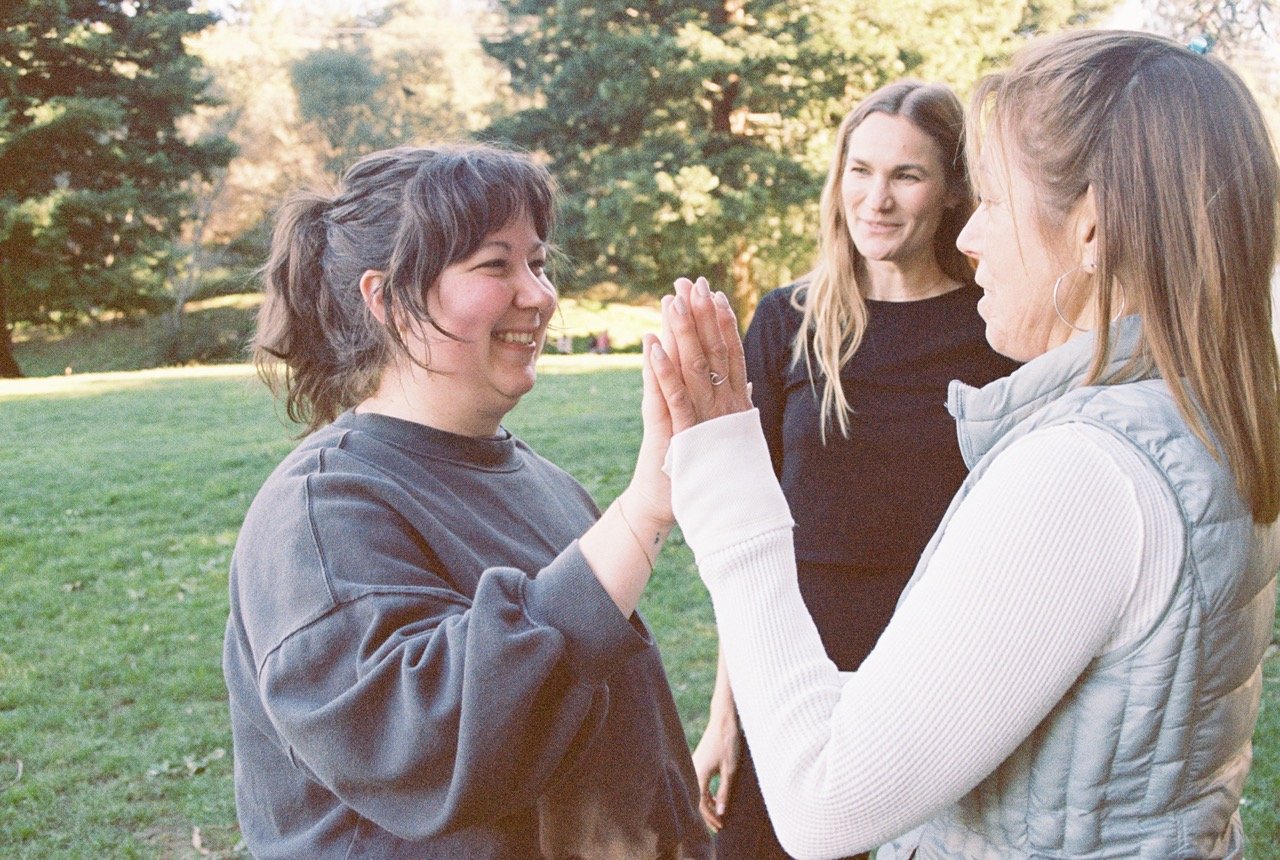
The body holds the key to lasting, liberating sobriety

Somatic Recovery: Why It Works
Did you know that for every 1 signal the brain sends to the body, it receives about 4-9 signals back from the body!? This significant imbalance highlights why body-based approaches to recovery can be so powerful. Our bodies are constantly sending vast amounts of information to our brains about our state, environment, and experiences.
The research shows that if we're only focusing on top-down approaches (brain to body), we're missing out on the majority of the information flow in our nervous system. That’s why we’re doing it differently here at Resilient. We believe in nervous system awareness and regulation as a fundamental building block of sustained recovery.